Pkdrej
Polycystin family receptor for egg jelly (PKD and REJ homolog) (Polycystic kidney disease and receptor for egg jelly-related protein)
Spatial tier: STRICT_EXCLUSIVE · Class: ION_CHANNEL · Top region: V (Motor nucleus of trigeminal) · Positive regions: 4/554
43.8Discovery Score
34.7Targetability Score
CEvidence grade C
What this means: Pkdrej: predicted fine-region profile is strict-exclusive, with 4 positive regions out of 554 (limit 12); direct spatial validation is required.
Function in V: evidence, prediction, innovation
- Gene function
- Pkdrej encodes the polycystin-1 family receptor for egg jelly, a large single-exon transmembrane protein with REJ, GPS and PLAT domains and a G-protein-modulating C-terminus, homologous to the sea-urchin sperm receptor. It is male germ line-restricted, sitting in the sperm head membrane and timing the acrosome reaction.
- Region function
- The motor nucleus of the trigeminal nerve houses jaw-closing and jaw-opening motoneurons and generates the rhythmic motor output of mastication and suckling.
- Published in this region
- none No region-specific literature found. Published work places Pkdrej only in testis and sperm: a plasma-membrane protein of the mouse sperm head (Butscheid 2006), a germ cell-restricted polycystin whose C-terminus couples to G proteins (Sutton 2006), with knockout males fertile but losing sperm competition through delayed acrosome-reaction competence (Sutton 2008), and human PKDREJ a testis-specific PKD-like gene (Hughes 1999).
- Predicted function
- Prediction: predicted expression in trigeminal motoneurons most likely reflects low-level or artefactual signal from a germ-line-restricted gene. If genuine, a polycystin-1-like receptor could act like PKD1 as a mechanosensor in motoneuron Ca2+ signaling. Knockout mice show no neurological or feeding phenotype, so a motor deficit is unlikely.
- Innovation
- ★★☆☆☆ 2/5 Unstudied in brain, but germ-line-restricted expression means low prior probability of a real role in the trigeminal motor nucleus.
- Tools
- Pkdrej targeted knockout mouse (Pkdrej tm/tm; Sutton 2008); anti-PKDREJ antibodies validated on sperm (Butscheid 2006); no ligand or Cre driver known.
- References
Direct evidence located at the region
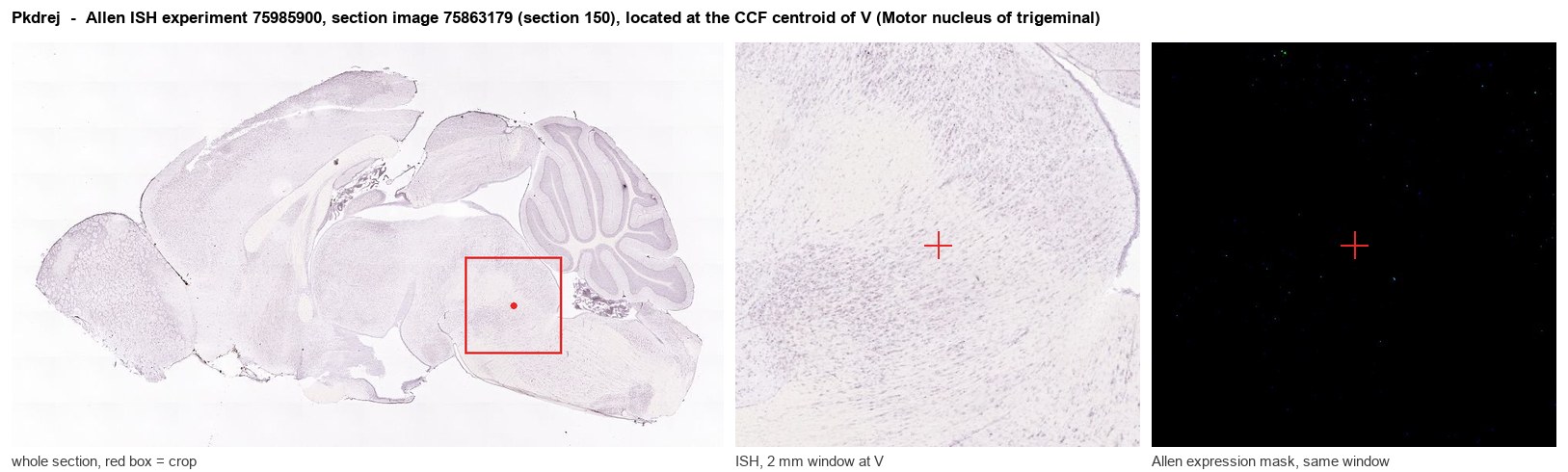
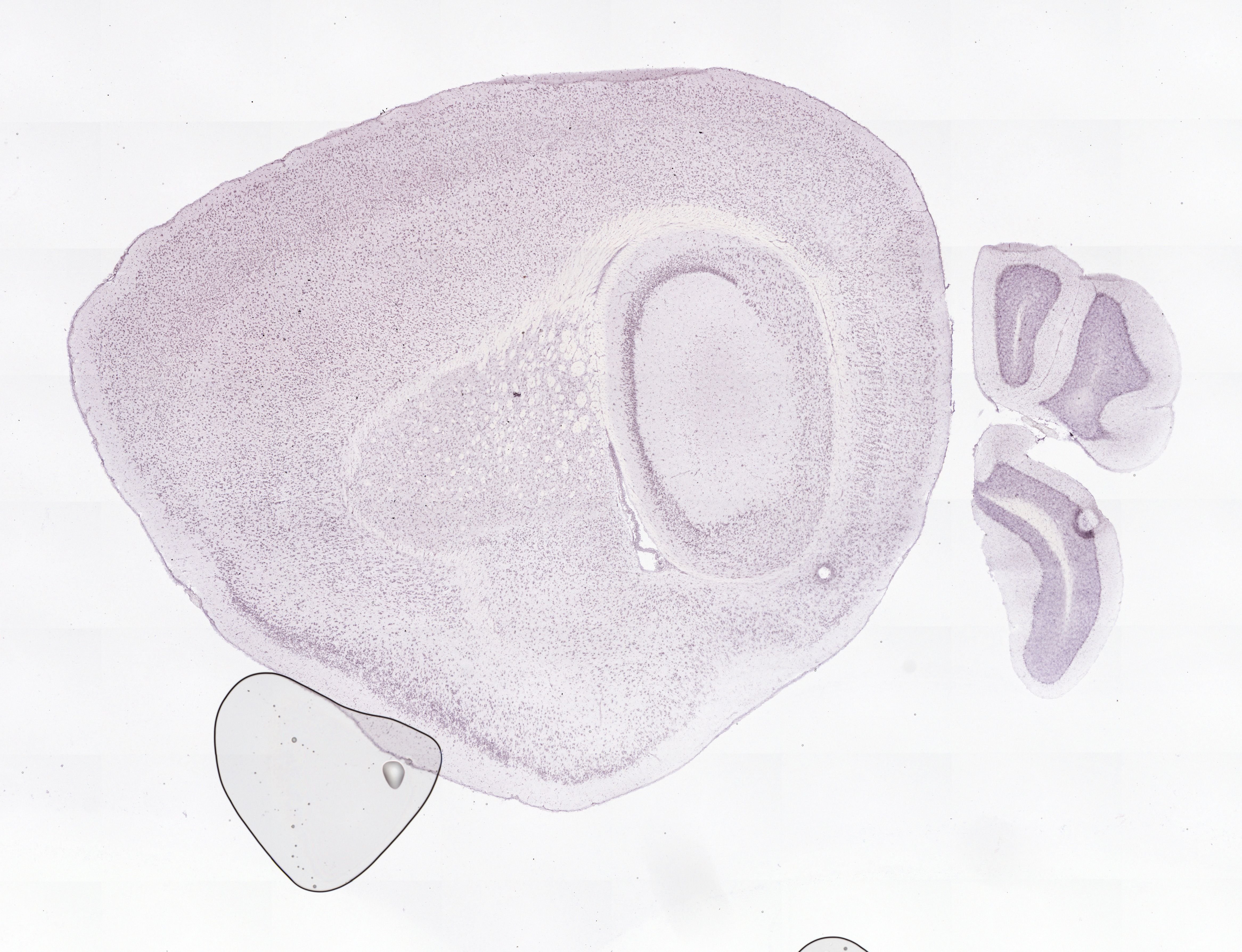
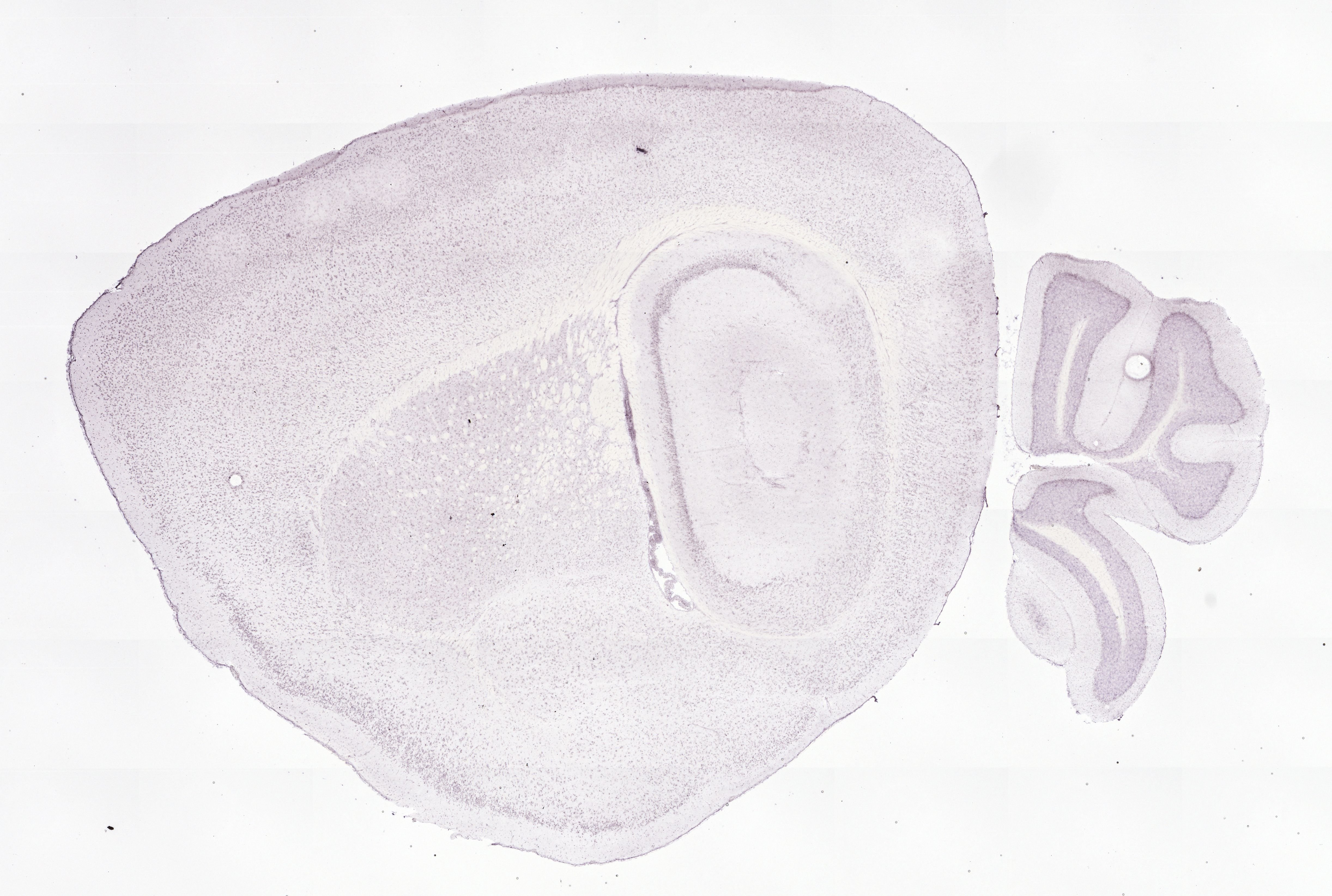
Allen ISH experiment 75985900, section image 75863179 (section 150): the section that contains the CCF centroid of Motor nucleus of trigeminal according to the Allen image-to-atlas alignment (reference_to_image), with a 2 mm window around that point. Left: whole section, red box = window. Middle: ISH signal. Right: Allen's expression-mask view of the same window. open this image in the Allen viewer
Look it up yourself: Allen Mouse Brain ISH for PkdrejAllen reference atlas: V (structure 621)ABC Atlas MERFISH viewer(in the ABC Atlas choose dataset MERFISH-C57BL6J-638850-CCF, colour cells by gene "Pkdrej" or by parcellation_substructure "V")All genes confined to V + 3-D brain
Direct spatial evidence
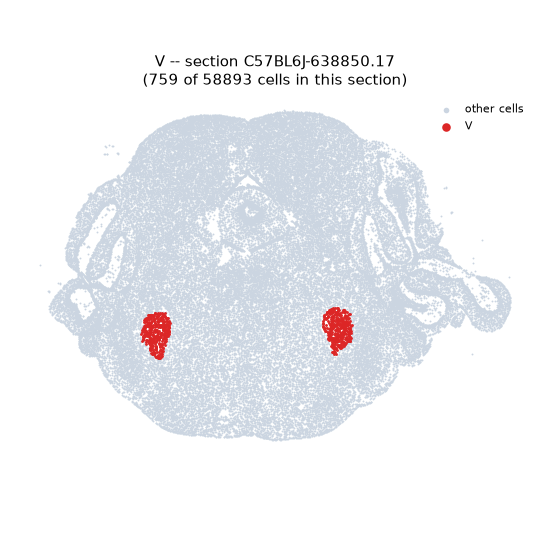
MERFISH REGION LOCATOR
DIRECT ALLEN ISH
DIRECT ALLEN ISH
Regional expression figure
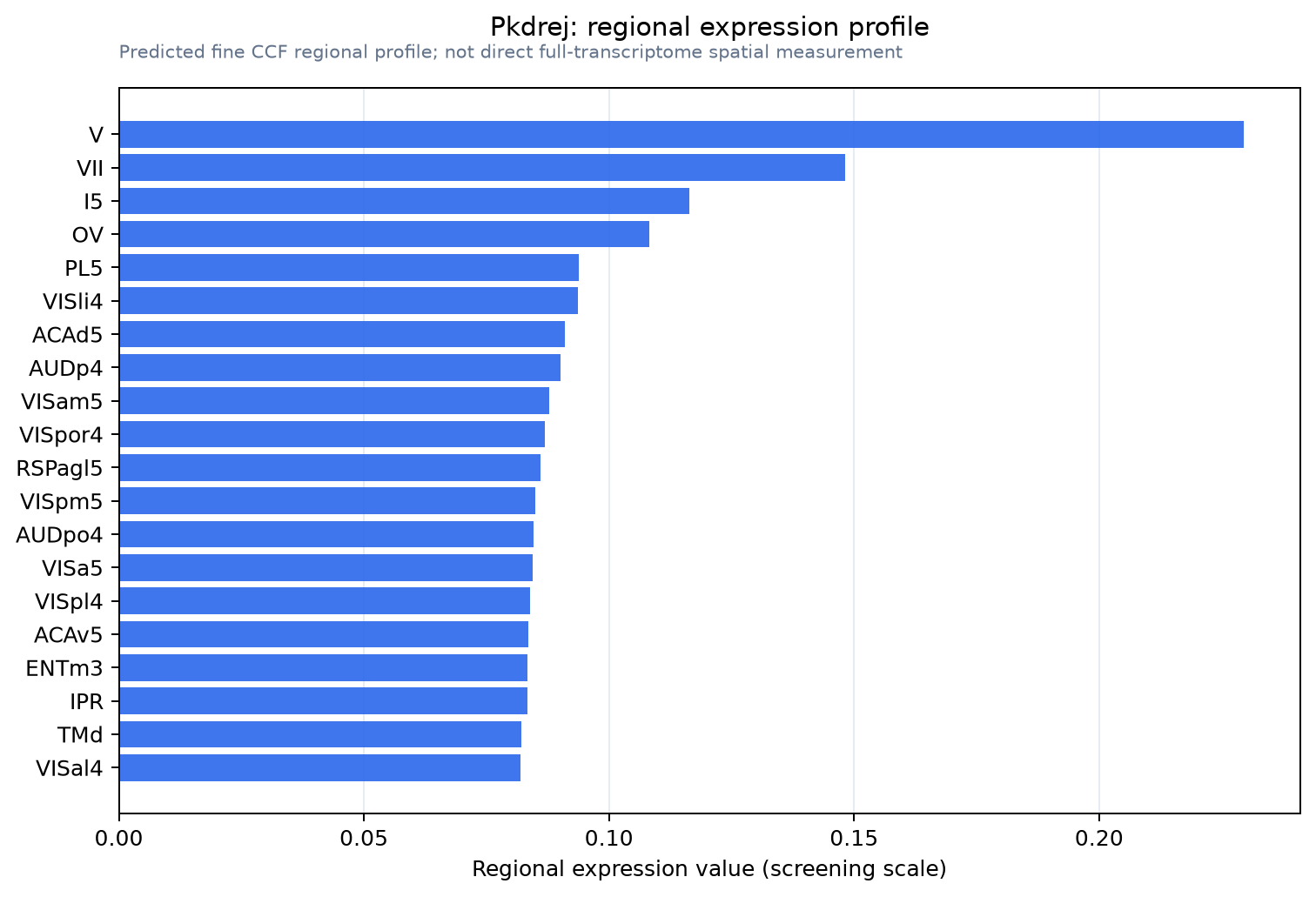
Predicted WMB × fine-CCF profile; not direct full-transcriptome spatial measurement.
Spatial profile
Evidence and specificity
- Evidence status
- PREDICTED_FINE
- Direct sources
- None; predicted localization only
- Exclusive threshold
- 12 positive regions out of 554
- Spatial specificity
- 0.305
- Top-region fraction
- 0.098
- Filter status
- PASS
Interpretation limits
- Cell-type-to-region projection is imputed expression, not direct spatial measurement.
- Adult reference atlases do not establish stability across age, sex, strain, state, or disease.
- Transcript abundance does not guarantee protein abundance or genetic-tool performance.